The Evolution of Mindfulness: Conversations shaping the future of the field

Over the past year, Brown’s School of Professional Studies Evolution of Mindfulness Speaker Series brought together leading voices in contemplative science, clinical care, education and practice to explore where mindfulness is headed next.

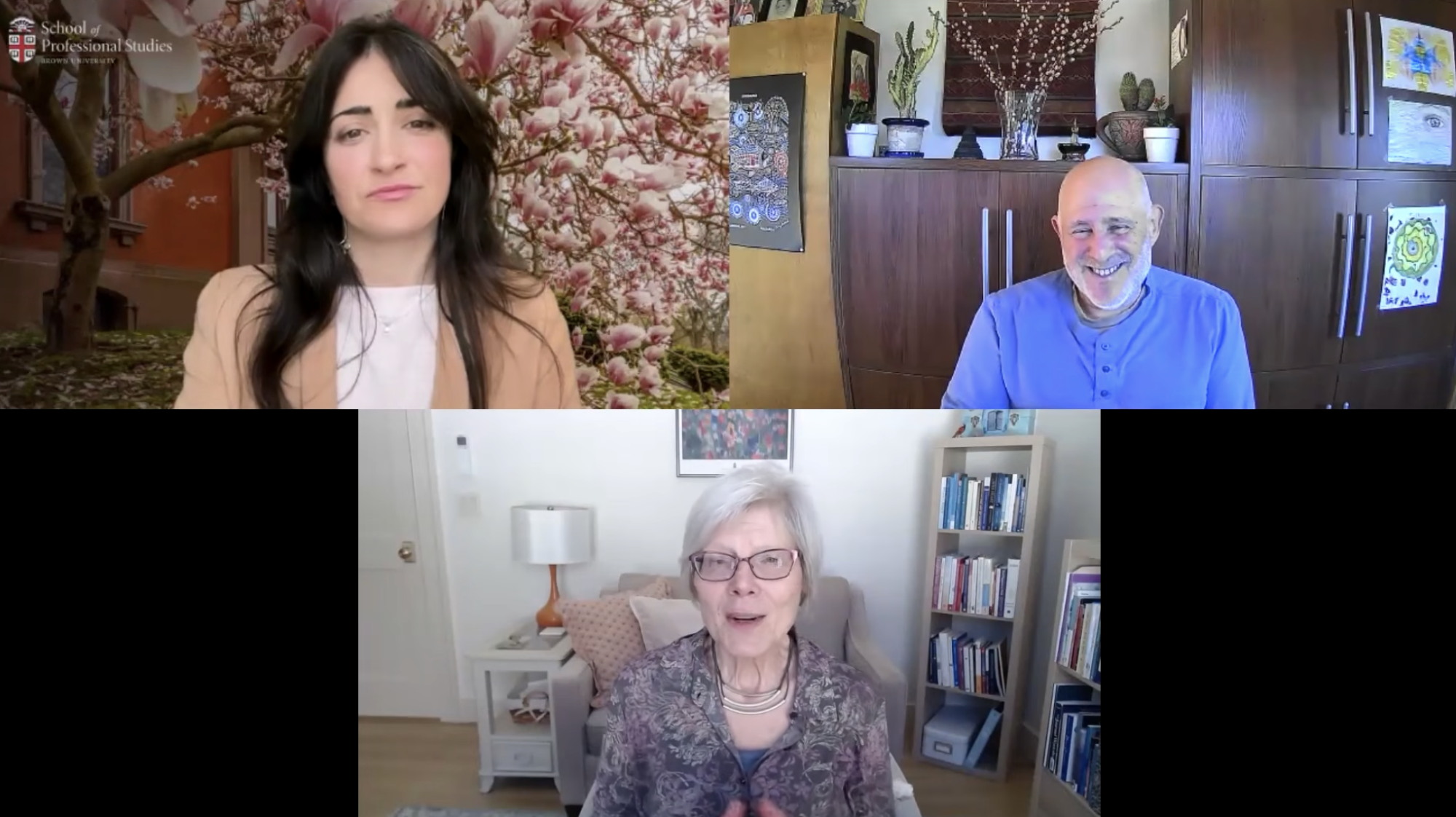
Gallery of each Mindfulness Speaker from their conversations

Mindfulness has reached an inflection point.

Once largely practiced within contemplative traditions and specialized clinical settings, mindfulness has evolved from a relatively niche field into one that increasingly shapes healthcare systems, schools, corporations, neuroscience laboratories and public discourse. Scientific research continues to deepen our understanding of attention, emotional regulation and neuroplasticity. At the same time, growing levels of anxiety, burnout, loneliness, trauma, political polarization and climate distress have raised broader questions about what mindfulness can — and cannot — offer in a rapidly changing world.

As mindfulness has expanded, so too have the questions surrounding it. What does it mean to teach mindfulness responsibly across cultures and communities without losing touch with its foundational history and roots? How do mindfulness-based approaches respond to trauma and collective suffering? Can technology help scale access without losing the relational depth at the heart of contemplative practice? And perhaps most importantly: what is mindfulness becoming?

These questions formed the foundation of the Evolution of Mindfulness Speaker Series hosted by Brown University School of Professional Studies in partnership with the Mindfulness Center at Brown University School of Public Health. Across its first 12 conversations, the series brought together innovators, researchers, clinicians, educators and contemplative practitioners, the series invited participants to examine not only the growth of mindfulness, but also its continuing evolution.

The series opened with Jon Kabat-Zinn, founder of Mindfulness-Based Stress Reduction (MBSR), whose pioneering work helped introduce mindfulness into mainstream medicine. From that foundation, subsequent conversations explored how the field continues to evolve across research, healthcare, education and society.

The response revealed a hunger for these conversations. The series has welcomed more than 21,000 registrants and over 8,500 attendees from around the world, including mindfulness teachers and trainees, clinicians, researchers, educators, healthcare professionals and lifelong learners alike, all gathering to explore the future of contemplative practice in modern society.

Again and again, one theme emerged: Mindfulness is evolving beyond stress reduction into deeper questions of embodiment, ethics, connection and collective well-being.


From stress reduction to human flourishing

Speakers reflected on how dramatically the field has changed over the past four decades. What began as an effort to bring ancient contemplative practices into medicine and psychology has now evolved into a robust interdisciplinary field grounded in neuroscience, clinical research, behavioral medicine and public health.

Richard Davidson, founder of the Center for Healthy Minds at the University of Wisconsin–Madison, returned repeatedly to a phrase that has become foundational within contemplative science: 

12

Conversations

21,402

Registrants

8,513

Attendees

Well-being is a skill.

Richard Davidson Founder of the Center for Healthy Minds at the University of Wisconsin–Madison

The implications of that statement are profound. Rather than viewing mental health as fixed or predetermined, researchers increasingly understand qualities such as resilience, attention, compassion and emotional balance as capacities that can be intentionally cultivated.

Amishi Jha similarly described attention as “a force multiplier for all that we can do,” emphasizing the growing body of research showing that mindfulness training can strengthen focus and resilience even in high-stakes environments such as the military, emergency response and medicine. 

Elizabeth Hoge’s discussion of the landmark TAME trial, which found that Mindfulness-Based Stress Reduction (MBSR) performed comparably to escitalopram (Lexapro) in treating anxiety disorders, further illustrated how mindfulness-based interventions are increasingly being recognized as legitimate clinical tools.

Zindel Segal, co-developer of Mindfulness-Based Cognitive Therapy (MBCT), reflected on how controversial mindfulness research once seemed within academic psychiatry. He recalled being warned in the 1990s that pursuing mindfulness research in a psychiatry department could amount to “career suicide” — a contrast to today’s rapidly expanding landscape of contemplative science and clinical integration. At the same time, Segal cautioned against reducing mindfulness to what he described as a mere “bliss machine,” emphasizing that the practice must remain grounded in genuine awareness rather than endless optimization or self-soothing.

Across the series, speakers repeatedly emphasized that mindfulness cannot be reduced to performance enhancement or symptom management alone. Davidson emphasized that emotional well-being does not mean becoming an “emotional zombie,” recalling moments watching the Dalai Lama move fluidly from grief to laughter with extraordinary presence and humanity.

The emerging vision across the series was not mindfulness as optimization, but mindfulness as “meta-cultivation”: a way of developing greater awareness, emotional flexibility and human flourishing in increasingly complex conditions, and within a rapidly changing world.

The body remembers: Embodiment, trauma and healing

One of the clearest shifts emerging across the series was the movement away from purely cognitive understandings of mindfulness toward a deeper recognition of the body’s role in healing and regulation.

Researchers and practitioners repeatedly emphasized interoception (i.e., the ability to sense internal bodily signals) as foundational to emotional health, trauma healing and behavior change. Zev Schuman-Olivier described how mindfulness helps individuals recognize subtle bodily cues associated with stress, craving or emotional overwhelm before those patterns fully take hold. Across the series, the body emerged not simply as a backdrop to experience, but often as the place where some of our most honest and important information lives.

This emphasis on embodiment represents a significant evolution within the field. Rather than treating mindfulness simply as a mental exercise, many speakers framed it as a practice of restoring relationship with the body itself.

That relationship, however, is not always simple.

In both Paula Ramirez’s and David Treleaven’s work on trauma-sensitive mindfulness the reality emerged that for many individuals, particularly those with histories of trauma, turning inward can initially feel destabilizing rather than calming. Concepts such as “interoceptive safety” and the “window of tolerance” emerged repeatedly throughout the series, underscoring the importance of choice, flexibility and nervous system awareness within mindfulness instruction.

Some of the series’ most emotionally resonant moments emerged from these conversations.

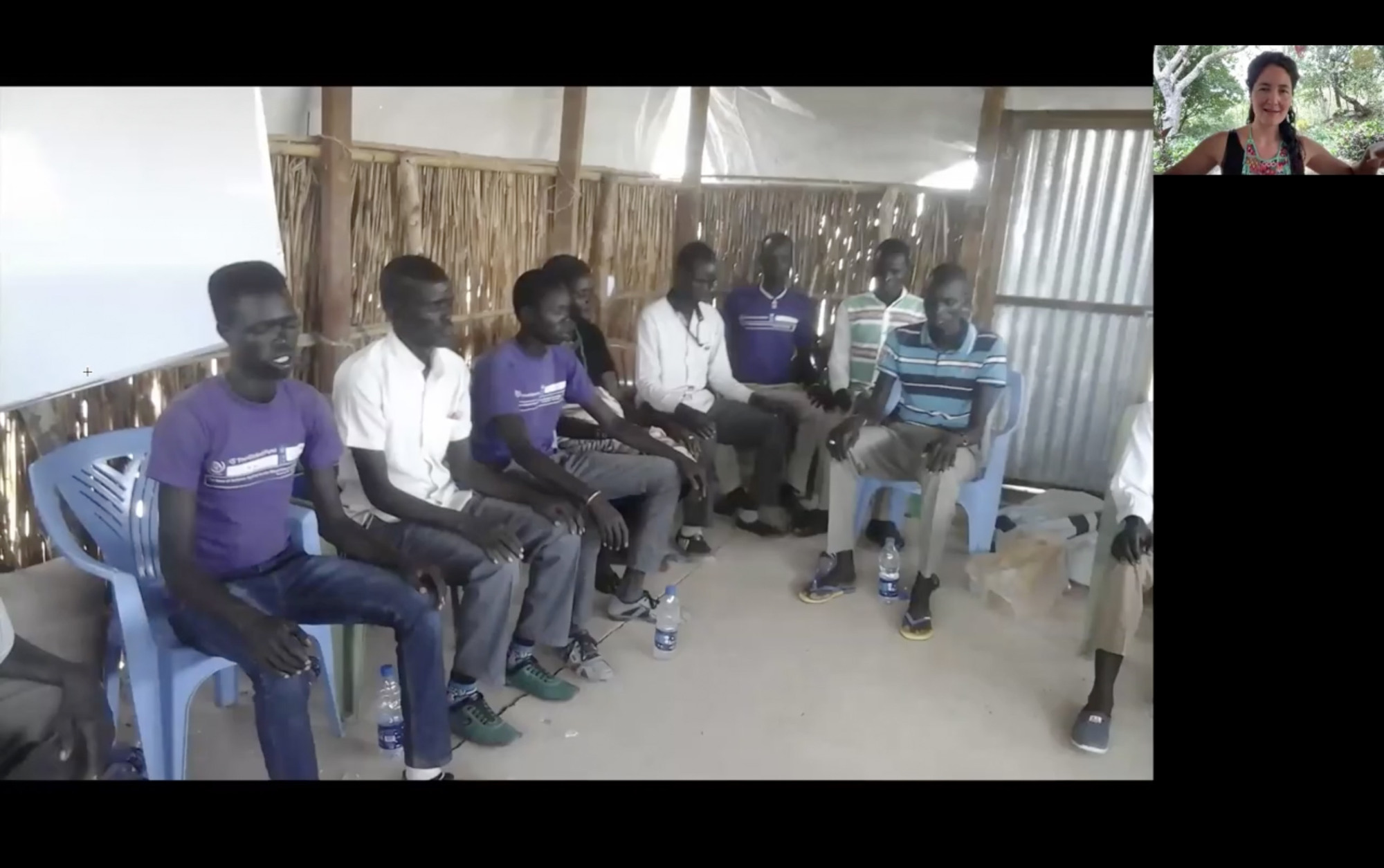
During her talk, Ramirez shared the story of a man in South Sudan who, after years of living through war and displacement, described his first experience of settling into mindful awareness with the words:

I was waiting for me.

Paula Ramirez Anthropologist, MBSR teacher and peacebuilder

The sentence carried enormous weight. In a single phrase, it captured both the fragmentation that trauma can create and the possibility of returning to oneself through presence and embodied awareness.

Treleaven approached many of these same questions through the lens of trauma-sensitive mindfulness. Rather than assuming that turning inward is always beneficial, he emphasized the importance of choice, flexibility and what he described as "interoceptive safety" — helping practitioners recognize when awareness of the body supports healing and when adaptations may be needed.

Ramirez offered another powerful example through her work with gravediggers in Colombia  suffering from PTSD after years of exposure to violence. Initially, participants attended mindfulness sessions simply because it allowed them to sleep safely in the same room together. Over time, however, the practices became a way of reconnecting with memory, dignity, ritual, and ancestral traditions that war had disrupted.

Together, these stories revealed mindfulness not merely as stress reduction, but as a relational and restorative process grounded in safety, embodiment and human connection.

Beyond “McMindfulness”: Ethics, presence and human connection

As mindfulness has become more widespread, many speakers raised concerns about what can be lost when contemplative practices are stripped from their ethical, historical and relational foundations and contexts.

Throughout the series, longtime leaders in the evolution of modern mindfulness, including Jon Kabat-Zinn and Bob Stahl, emphasized that mindfulness is not simply a technique, but a way of being grounded in awareness, compassion, integrity and presence.

A theme echoed throughout the series was the idea that “You — and your life — are the curriculum.” The phrase emerged as one of the program's defining insights, underscoring that mindfulness cannot be taught through scripts or protocols alone. Rather, speakers emphasized that the teacher's presence, self-awareness and lived experience are central to the practice.

Kabat-Zinn described mindfulness as “a love affair with awareness,” while also warning against reducing practice to productivity enhancement or commercial self-optimization. Several conversations revisited concerns surrounding “McMindfulness” — the commodification of contemplative practices in ways that disconnect them from ethics, justice and relational care.

At the same time, the series highlighted how mindfulness itself is evolving toward greater cultural responsiveness and humility.

David Treleaven and Paula Ramirez both challenged “one-size-fits-all” approaches to mindfulness instruction, particularly when working across diverse cultural contexts or communities impacted by systemic trauma. Ramirez described the importance of moving from “mindfulness done to a population” toward “mindfulness done with a community,” emphasizing collaboration, local wisdom and cultural adaptation. 

Across these conversations, a recurring sentiment emerged: rigid adherence to protocols can sometimes undermine the very responsiveness, safety, and relational awareness that mindfulness practice is intended to cultivate.

The future of mindfulness may depend less on rigid standardization and more on preserving integrity while remaining responsive to the lived realities of different individuals and communities.

From individual practice to collective care

Another major evolution emerging across the series was the growing recognition that mindfulness is not only about individual well-being, but also about how humans relate to one another within larger systems of suffering and care.

Several speakers reflected on rising levels of loneliness, disconnection, climate anxiety and political polarization, questioning whether mindfulness might help foster forms of collective resilience and reconciliation.

Susan Bauer-Wu spoke powerfully about “wise hope” — a grounded form of hopefulness that acknowledges suffering without collapsing into despair. Rather than bypassing difficult realities, wise hope involves staying present and engaged even amid uncertainty.

“Water the gardens you can reach,” Bauer-Wu encouraged, offering a vision of practice rooted not in grandiosity, but in steady acts of care and presence.

Bob Stahl similarly described mindfulness as a pathway toward reconciliation, sharing the story of a Colombian museum where former weapons had literally been transformed into floor tiles — a physical embodiment of healing and transformation emerging from violence itself.

Underlying many of these conversations was a recurring recognition of interconnectedness. Echoing Albert Einstein’s observation that “separation is an optical delusion of our consciousness,” Bob Stahl reflected on the broader contemplative understanding that personal well-being cannot ultimately be separated from collective well-being.

In this sense, mindfulness was increasingly framed not only as a personal practice, but as part of a broader response to the social, ecological and relational challenges of contemporary life.

Technology, accessibility and the future of mindfulness

The series also explored one of the field’s most pressing contemporary tensions: how to expand access to mindfulness while preserving the depth, integrity and humanity at the heart of the practice.

Conversations around AI, digital therapeutics and healthcare policy revealed both optimism and caution. Judson Brewer explored how ancient contemplative wisdom and modern neuroscience can inform one another, arguing that many of today’s scientific questions have their roots in centuries-old contemplative traditions. Within that broader context, he discussed how technology and app-based interventions may help deliver mindfulness tools to individuals who might otherwise never access care, particularly in moments of acute stress or crisis.

At the same time, several speakers questioned whether digital systems can replicate the relational depth of human presence and contemplative transmission. Can an app offer genuine compassion? Can AI support healing without reinforcing disconnection or dependency? What happens when contemplative wisdom becomes mediated primarily through algorithms and platforms?

The field is also confronting larger questions surrounding professionalization, scalability and public access. Speakers discussed the growing push for national teaching standards, healthcare reimbursement models and policy integration that would allow mindfulness-based interventions to become more accessible within safety-net healthcare systems and underserved communities.

Isabel Roth brought a complementary perspective rooted in implementation science and public health accessibility. Her work focuses on integrating mindfulness programs into primary care systems serving low-income and rural populations, particularly individuals living with chronic pain. Echoing a broader theme that emerged across the series, Roth’s work reflected the idea of “curb cuts” — adaptations originally designed to support those with the greatest needs that ultimately expand access for everyone. In the context of mindfulness, this meant designing programs responsive to underserved and vulnerable populations while strengthening accessibility and care more broadly.

These conversations reflected a field navigating a delicate balance: embracing innovation while resisting the loss of depth, ethics and human relationship. As Brewer described it, the challenge may be finding ways to place “old wine in new bottles” — adapting ancient contemplative wisdom to modern systems without losing its essential character.

An evolving conversation

Across many conversations, the Evolution of Mindfulness Speaker Series has continued to reveal a field actively wrestling with its own growth, responsibilities and possibilities.

Mindfulness today is no longer understood solely as a tool for stress reduction or private wellness. Increasingly, it is being explored as an embodied, relational, ethically grounded practice capable of engaging some of the most complex challenges facing modern society: trauma, disconnection, inequality, technological change, ecological instability and collective suffering.

What emerged across the series so far was not a single unified vision for the future of mindfulness, but something perhaps more valuable: an ongoing conversation marked by curiosity, humility, scientific inquiry, ethical reflection and deep care for human flourishing.

That conversation is still unfolding.

And perhaps that is precisely the point.

The future of mindfulness may not lie in arriving at definitive answers, but in continuing to ask the right questions — together.

Mindfulness Journal

News & Stories from SPS

Mindfulness to hold complexity

In this reflection, peacebuilder and mindfulness practitioner Paula Ramírez explores how mindfulness can help individuals navigate stress, grief and uncertainty. The piece offers trauma-sensitive guidance and a simple grounding practice to support care, presence and resilience.
Read Article
Patti Holland, assistant director of mindfulness teacher education at Brown’s School of Professional Studies, shares why mindfulness programs and mindfulness-based cognitive therapy (MBCT) training matter now more than ever.
Read Article
Building on decades of research supporting mindfulness for stress reduction and cardiovascular health, a new study finds that a mindfulness trial, originally designed to lower blood pressure, significantly reduced depression symptoms, especially for those with early-life adversity.
Read Article