MHL Career Outcomes (jump page)
Alumni Spotlight
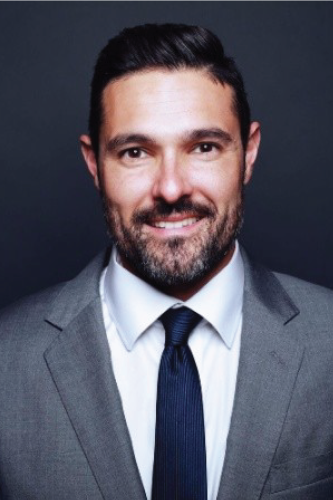
James Castro '19
Healthcare Investment Banking at B. Riley Securities, a B. Riley Financial Company, Senior Managing Director
“Being able to complete an internship while doing my master’s was key to gaining valuable experience and pivoting my career. The focused career sessions with alumni also helped me build genuine connections and get meaningful advice. In my current role, the emphasis PRIME placed on getting out of the building, talking to people, and defining problems clearly has been central to my everyday work.”
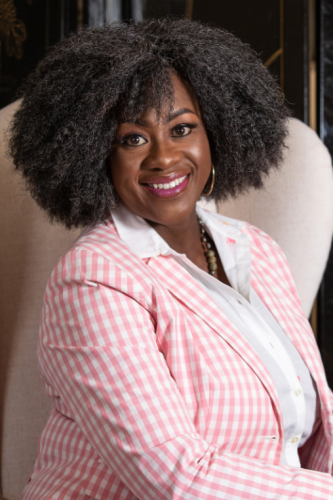
Jackie Ejuwa '17
President & CEO Transformative Blue Health Advisors
“Brown’s MHL program had the most comprehensive curriculum. In addition, each cohort included diverse healthcare leaders with real world experience from all areas of healthcare”
Where MHL Alumni have advanced
48 %
The Executive Pinnacle
48% of graduates hold VP, C-Suite/Business Owner titles within three years of graduation. (Note: 25% began the program with these titles.)
49 %
The Leap to VP
49% of our multi-function managers are promoted to Vice President or C-Suite/Business Owners within three years of graduation.
46 %
Widen Your Span of Control
46% of graduates with non-manager or manager titles are promoted to lead multi-functional teams within three years of graduation.
12 %
Founders
12% of graduates are Founders or Business Owners within three years, quantifying our commitment to entrepreneurship.
Industries
Since the first cohort enrolled in 2013, 254 students have completed our master’s program. This table illustrates the industry breakdown of entering students.

| Industry | % of Entering Students |
|---|---|
| Clinicians – MD, DO, DDS/DMD | 31.3% |
| Integrated Delivery Systems | 21.0% |
| Outpatient Organizations | 10.7% |
| Pharma | 8.3% |
| Consulting | 6.3% |
| Information Technology | 4.4% |
| Health Insurance | 3.2% |
| Medical Device | 2.0% |
| Venture Capital / Healthcare Finance/Banking | 1.6% |
| Professional Organizations | 1.2% |
| Elder Care | 1.2% |
| Government | 0.8% |
| Other | 7.5% |
Example Promotion Paths (from actual alumni)
| Title before MHL | Current Role |
|---|---|
| Technical Lead | Technical Project Manager, Implementations |
| Director, Nursing Infomatics & Performance Improvement | VP, Ambulatory & Business Dvp |
| Director, Commercial Marketing | Global Marketing Director |
| Quality Control & Improvement Analyst | VP, Clinical Services & Support |
| Manager, Provider Operations | Program Director, Value Based Care |
| Ophthalmologist | Founding Assistant Dean for Clinical Education at a new medical school |
| Chief, women and children's service line | Chief Medical Officer, NY South Region |
| Maternal Child Health Fellow | Associate Medical Director, NY State Department of Public Health |
| Nephrologist | Senior Medical Director, Optum |
| Chief, Dept of Emergency Medicine | Chief Medical Officer |
| SVP, Director of Finance | CEO, Founder of Bloodbuy |
| VP, Technical Operations | CEO, Aprecia Pharmaceuticals |
| Director, Global Strategic Sourcing | Executive Director, CMC Procurement |
| Managing Consultant | Director, Consulting |
| COO at a FQHC | COO, Advent Health | Well65+ |
| Senior Consultant | Chief Revenue Officer, Lumeris |
| Senior Director of Revenue Integrity | Division Vice President, Population Health Operations |
“ Brown's MHL program stood out because it emphasizes interdisciplinarity, experiential learning, and individualized attention, preparing students to be effective and compassionate leaders in the healthcare industry. ”
Example Placements
| Integrated Delivery Systems | Pharmaceutical / Medical Device | Public Health / Public Policy | Payors | Consulting | Technology | |
|---|---|---|---|---|---|---|
| Kaiser Permanente | Geisinger Health System | CVS Health | West Virginia Secretary of Health | UnitedHealth Group | Accenture | Apple |
| MedStar Health | Moffitt Cancer Center | Sanofi | New York State Department of Health | Centene | Booz Allen Hamilton | Microsoft |
| Novant Health | Baptist Health | Johnson & Johnson | Massachusetts Hospital & Health Association | Blue Shield of California | Lumeris | EPAM |
| Advent Health | Optum - WellMed Medical Management | Novo Nordisk | Massachusetts Health Policy Commission | Kaiser Permanente | Health Management Associates | Workgroup for Electronic Data Interchange (WEDI) |
| Brown University Health | Weill Cornell Medicine | Moderna | Seattle Human Services Department | Blue Cross & Blue Shield of RI | Stroudwater Associates | Oracle Health |
| Catholic Health | HCA Healthcare | Servier Pharmaceuticals | Travis County (TX) | Cognosante | athenahealth | |
| CommonSpirit Health | Veterans Health Administration | Bend Bioscience | Joint Commission | GE Healthcare Partners | ||
| Mount Sinai Queens | Care New England | Celldex | Catalysis, Inc. | |||
| Johns Hopkins Medicine | Stanford Health Care | BCO Pharmaceuticals | ||||
| AtlantiCare Health System | Summit Health Care | Baxter International | ||||
| Visionworks of America | Ochsner Health | Astellas Pharma US | ||||
| Philips | ||||||
| Medtronic | ||||||
“ Brown’s program encompassed leadership and ”people” skills, that I could put into use immediately. The capstone project was viewed from the many different angles needed in healthcare, and as coursework was completed, it directly applied to the capstone project as well as my everyday responsibilities. ”
Data Collection Process
The Data Collection Process
Every data science project begins with data collection, and real-world data is often quite messy. It’s crucial to understand exactly how the data is gathered and what assumptions are made in the estimates to properly interpret the insights.
After students graduate from the program, we collect their LinkedIn profiles. These profiles help us estimate post-graduation employment rates, track the industries our alumni work in, the companies they join, and their current job titles. We review everyone’s LinkedIn profile at specific time points post-graduation to gather this data. As you can imagine, there are a few challenges with this process:
- While most students create a LinkedIn profile, a few do not.
- Not everyone keeps their profiles up-to-date. Sometimes, we hear the great news that an alumni has landed a job, but their LinkedIn profile doesn’t reflect this.